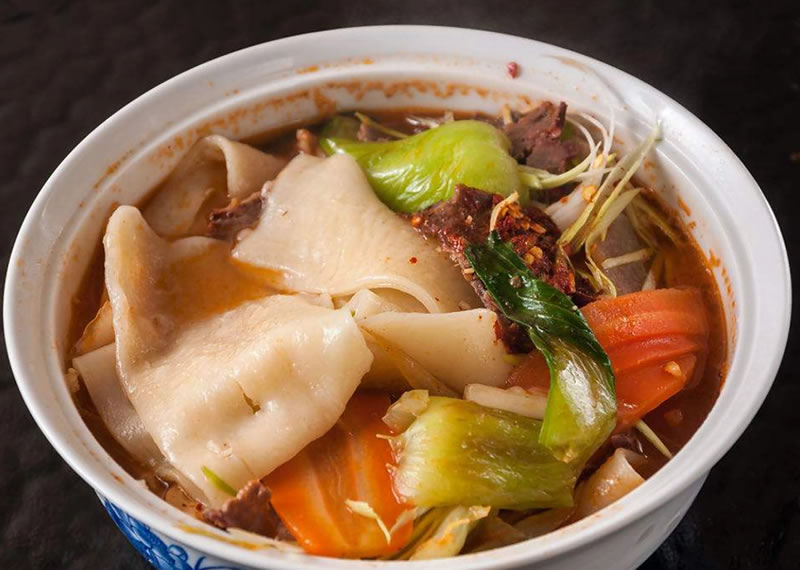
Biang Biang noodles are a wide, belt-shaped Chinese hand-pulled noodle and a culinary icon from Shaanxi Province. The name “Biang Biang” originates from the distinctive sound—biang! biang!—made when the dough is skillfully stretched and slapped against the prep counter. According to legend, chefs stretch the dough with both hands, swing their arms, and slap it onto the counter to create that unique rhythmic noise. In the Shaanxi dialect, “biang” is an onomatopoeic word that perfectly mimics this sound and evokes the noodle’s qualities: chewy, smooth, and satisfyingly substantial.
With their unique texture and rich cultural background, Biang Biang noodles are a must-try Shaanxi delicacy that continues to attract countless food lovers eager to experience their bold flavor.
Biang Biang noodles are defined by these key characteristics:
- Noodle Form
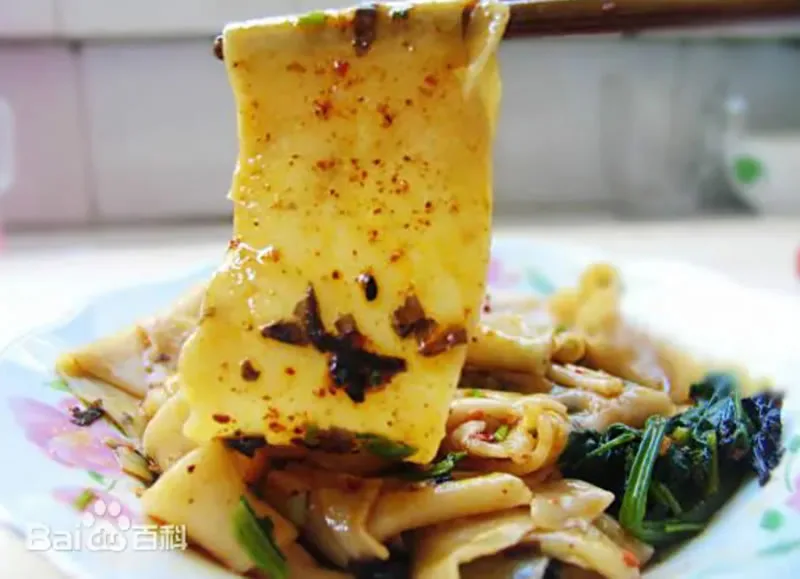
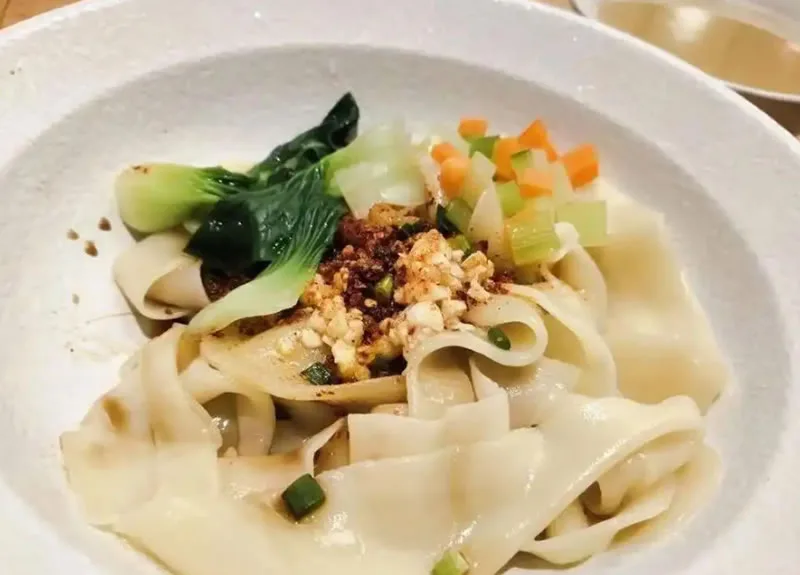
The noodles are exceptionally wide, thick, and flat, often resembling a belt. They can be several centimeters wide and are typically 40–50 centimeters long, offering a delightfully chewy and springy bite. - Production Process
The dough is made from high-quality Guanzhong wheat flour. It is then meticulously crafted through manual techniques like repeated kneading, resting, stretching, and slapping. This labor-intensive process is what gives the noodles their renowned softness and elasticity. - Seasoning & Toppings
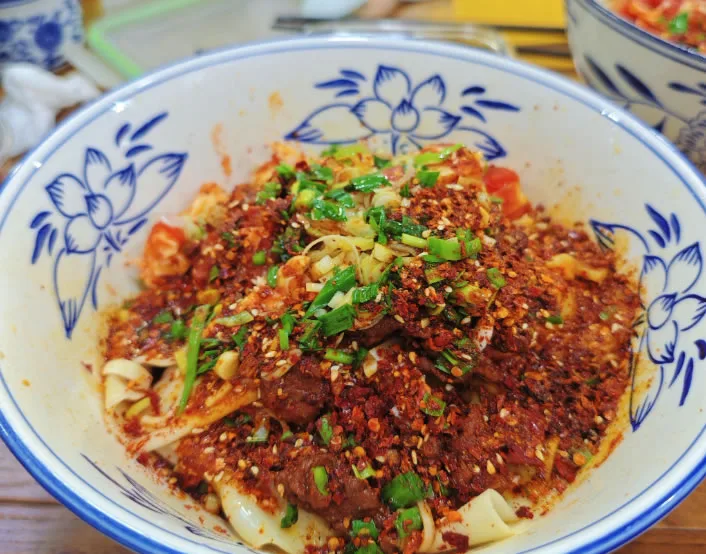
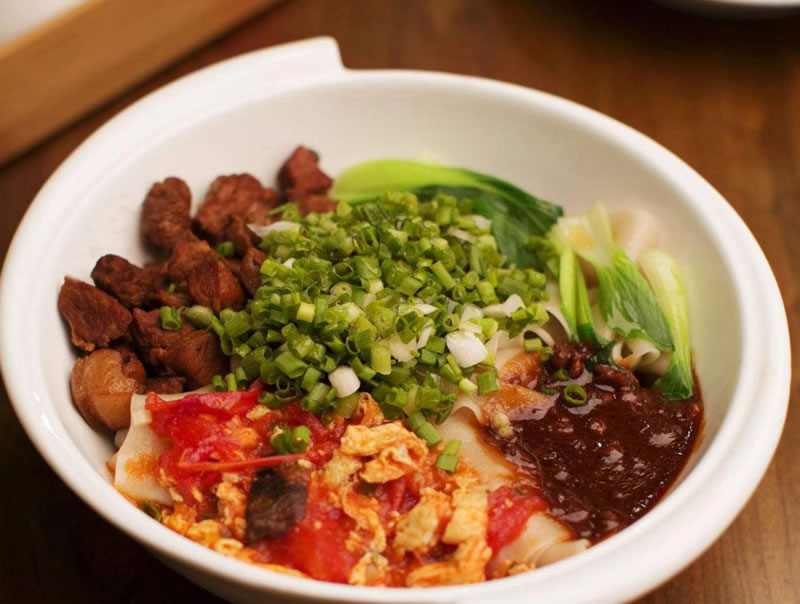
The signature seasoning is hot oil chili sauce, made by sizzling hot oil over a blend of chili flakes (often from local Qin peppers), garlic, and other spices. This is complemented by toppings like minced garlic, scallions, bean sprouts, and ground meat. The aromatic chili oil coats the noodles, creating a famous flavor profile that is spicy, tangy, savory, and incredibly fragrant. - Serving Method
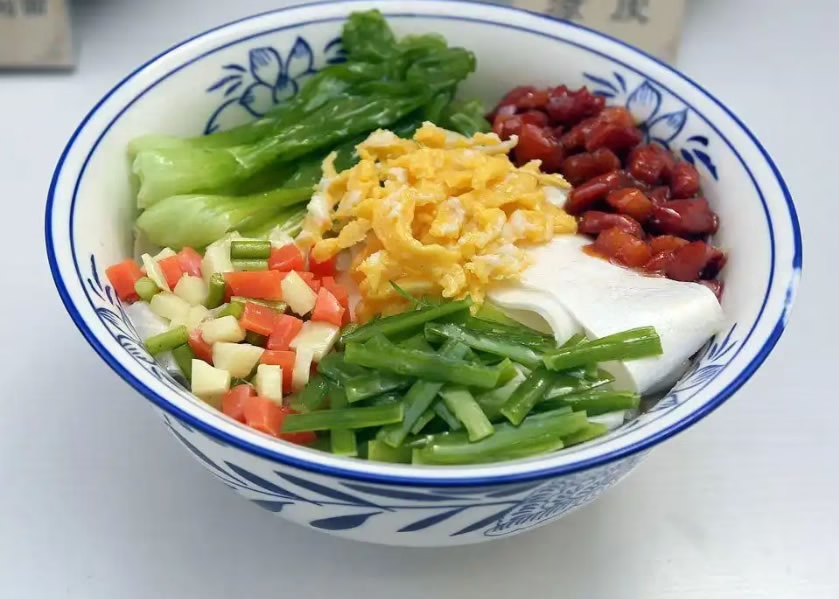
The noodles are usually served in a large bowl with the toppings arranged in layers over them. Before eating, it’s essential to mix everything thoroughly to combine all the flavors and textures perfectly. - Cultural Significance
Biang Biang noodles are more than just a meal; they are a symbol of Shaanxi’s food culture. The complex Chinese character for “Biang” (which has 58 strokes) is surrounded by historical tales, some dating back to the Qin Dynasty. This dish embodies the hearty, straightforward, and inclusive spirit of the Guanzhong people. - Key Ingredients
The primary ingredients include wheat flour, chili powder, scallions, garlic, cooking oil, salt, light soy sauce, vinegar, and optional vegetables like spinach or bok choy for added freshness.
Shaanxi is home to many famous noodle dishes, such as Qishan saozi noodles and Yangling dipping noodles, but Biang Biang noodles hold a special place in the hearts of locals. From the Qin Dynasty to the present day, a bowl of these wide, chewy noodles—tossed in a spicy, garlicky sauce—has been comforting and nourishing generations of people from Shaanxi.