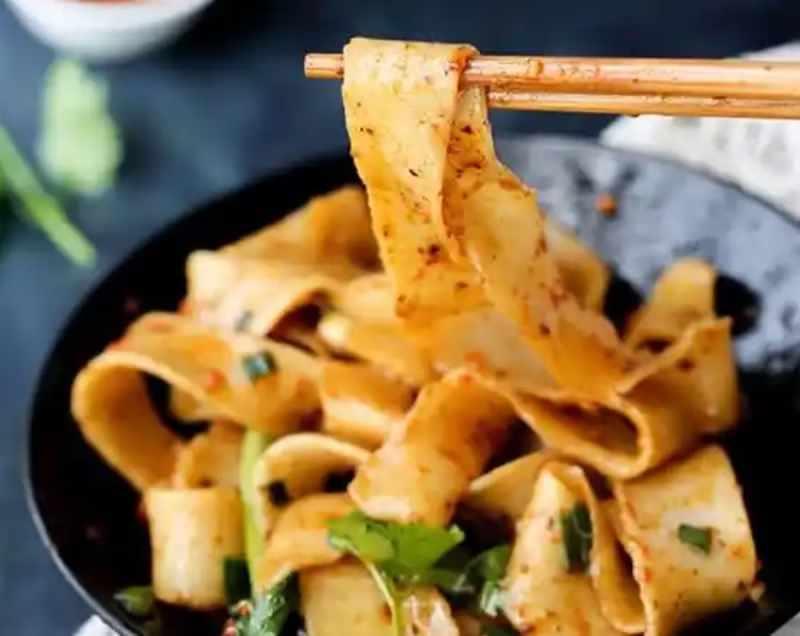
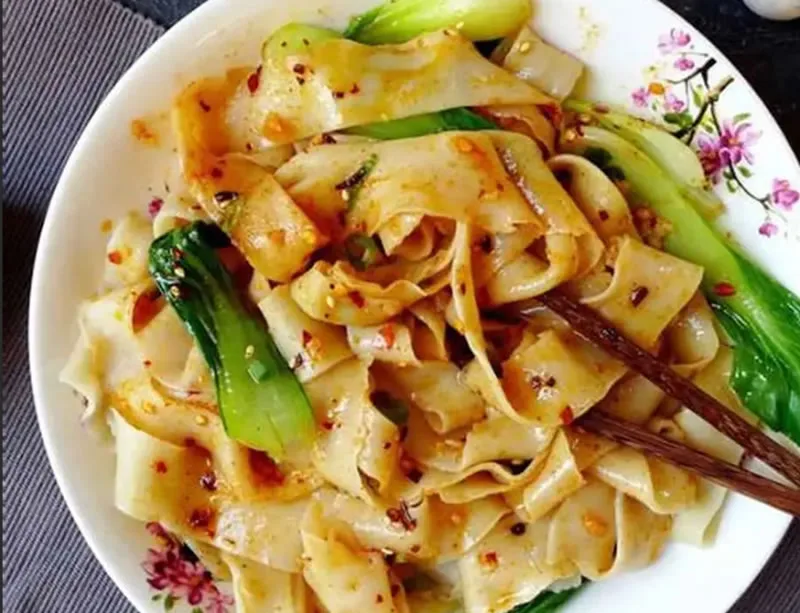
Learn how to make Biang Biang noodles from scratch with this ultimate guide! These wide, belt-like noodles from China’s Shaanxi province are famous for their satisfying chew and the fun, slapping technique used to make them. Follow our detailed, step-by-step instructions to create this authentic dish in your own kitchen.
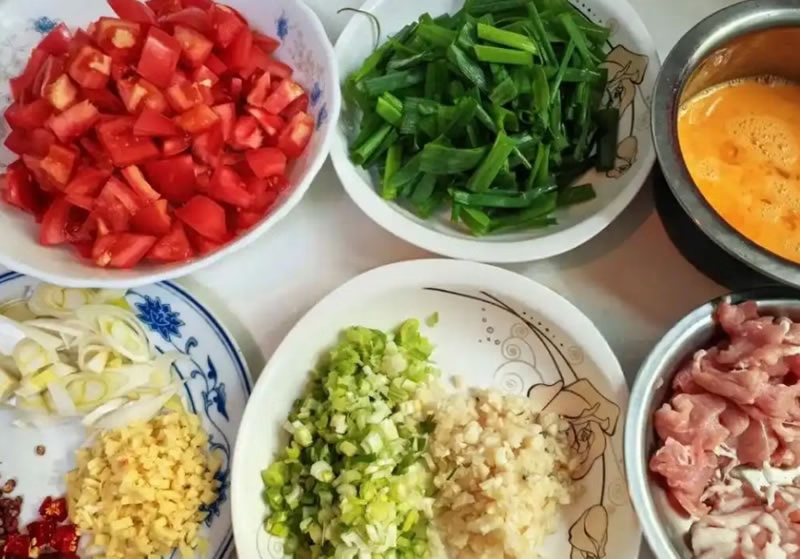
Key Ingredients You’ll Need
For the Noodle Dough:
2 cups (250g) all-purpose flour
3/4 cup (180ml) warm water
1/2 teaspoon salt
For Stretching and Cooking:
1-2 tablespoons vegetable oil (for coating)
For Classic Oil-Splashed Biang Biang Noodles:
2 green onions, finely chopped
2 cloves garlic, minced
1-2 tablespoons chili flakes or chili oil
2 tablespoons light soy sauce
1 tablespoon Chinkiang vinegar (or black vinegar)
1 teaspoon oyster sauce (optional)
3-4 tablespoons hot vegetable oil (for sizzling)
Step-by-Step: How to Make Biang Biang Noodles Dough
Step 1: Combine the Ingredients
In a large mixing bowl, whisk together the flour and salt. Gradually add the warm water while stirring with chopsticks or a fork until a shaggy dough forms.
Step 2: Knead to Perfection
Turn the dough out onto a lightly floured surface. Knead firmly for 8-10 minutes until the dough is incredibly smooth and elastic. This step is crucial for developing the gluten, which gives the noodles their signature chew.
Step 3: Let the Dough Rest
Place the smooth dough back in the bowl, cover it with a damp cloth or plastic wrap, and let it rest at room temperature for at least 30 minutes (up to 2 hours). This allows the gluten to relax, making the dough easy to stretch later.
The Art of Shaping and Stretching
Step 4: Divide and Prepare
After resting, the dough will be more pliable. Divide it into 6-8 equal pieces. Roll each piece into a small oval shape. Lightly coat all sides with vegetable oil to prevent drying, cover, and let them rest for another 10 minutes.
Step 5: The Signature Slap and Pull
This is the most iconic part of making Biang Biang noodles.
Take one oiled oval and use a rolling pin to press a deep line down its center (this creates the “belt”).
Hold the ends with both hands and gently slap the dough against the counter, stretching it slowly using its own weight. You’ll see it transform into a long, wide, belt-like noodle.
Cooking Your Homemade Noodles
Step 6: Boil to Al Dente
Bring a large pot of salted water to a rolling boil. Gently drop in the stretched noodles.
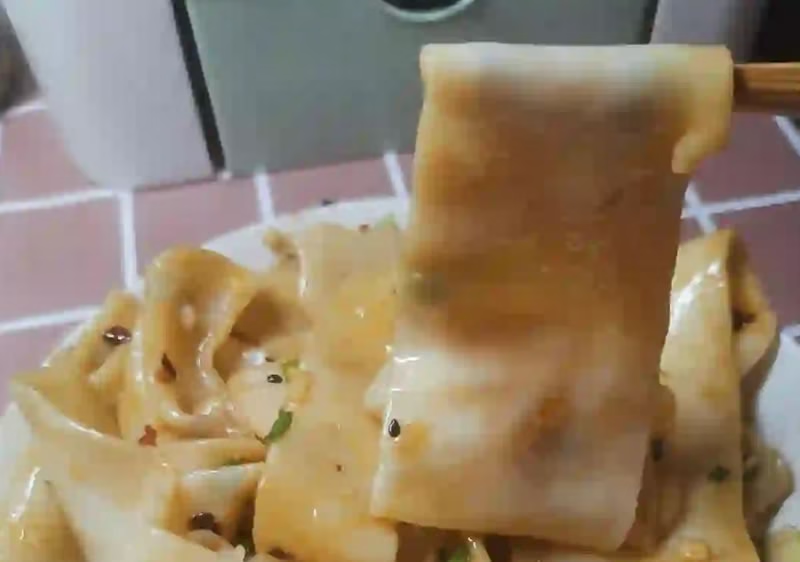
Cooking Time: Fresh Biang Biang noodles cook quickly! They are typically done in about 2-3 minutes after they float to the surface. The noodles should be tender but still pleasantly chewy. We recommend tasting one to ensure it’s cooked to your liking.
Two Classic Ways to Serve
- Oil-Splashed Biang Biang Noodles (Youpo Mian)
This is the most famous way to enjoy them.
Drain the cooked noodles and place them in a heatproof bowl.
Top immediately with chopped green onions, minced garlic, chili flakes, soy sauce, vinegar, and oyster sauce.
Heat the vegetable oil in a small pan until it sizzles when a drop of water is added. Carefully pour the smoking hot oil over the toppings. The sizzling sound and incredible aroma are part of the experience! Toss well and serve.
- Simple Soup Noodles
For a comforting bowl, place the cooked noodles in a soup bowl. Add your favorite blanched vegetables (like cabbage or bok choy). Pour hot broth over the top, season with a little salt and a drizzle of sesame oil.
Pro Tips for the Best Results
Dough Texture is Key: The dough should be soft but not sticky. Adjust with a tiny bit of flour or water as needed during kneading.
Don’t Shortcut the Resting Time: This is the secret to easy stretching. A well-rested dough won’t snap back.
Be Confident with the Slap: Don’t be afraid to use a gentle, rhythmic slapping motion against the counter. It’s fun and effective!
Conclusion
Congratulations! You’ve now mastered the fundamentals of how to make Biang Biang noodles. With this ultimate guide, you can impress friends and family with your handmade noodle skills. The process is an enjoyable craft that results in a truly delicious and authentic taste of Shaanxi cuisine. Enjoy your homemade culinary creation!