When you think of Biang Biang noodles, you probably imagine a chef skillfully stretching and slapping dough. And you’re right — traditionally, these famous Shaanxi noodles are made entirely by hand. But these days, you might also come across semi-finished or instant versions in stores. So, are Biang Biang noodles always handmade? Well, it depends!
The Traditional Handmade Method
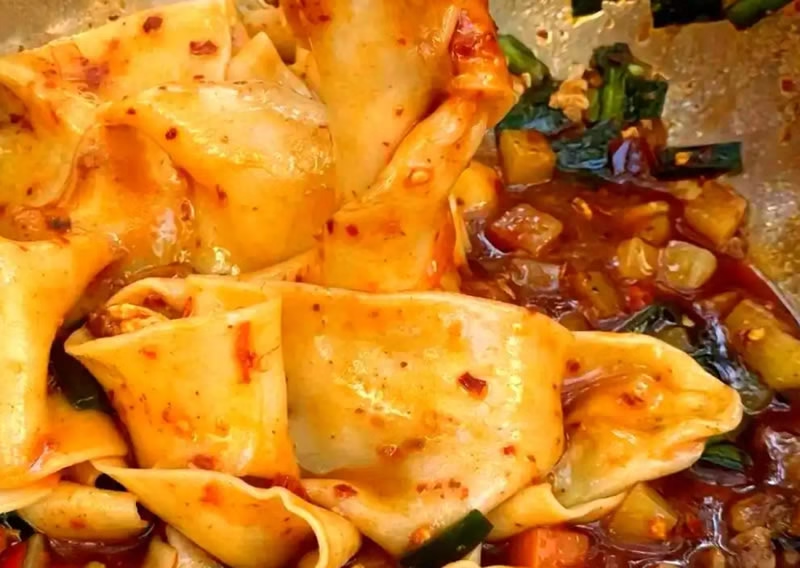
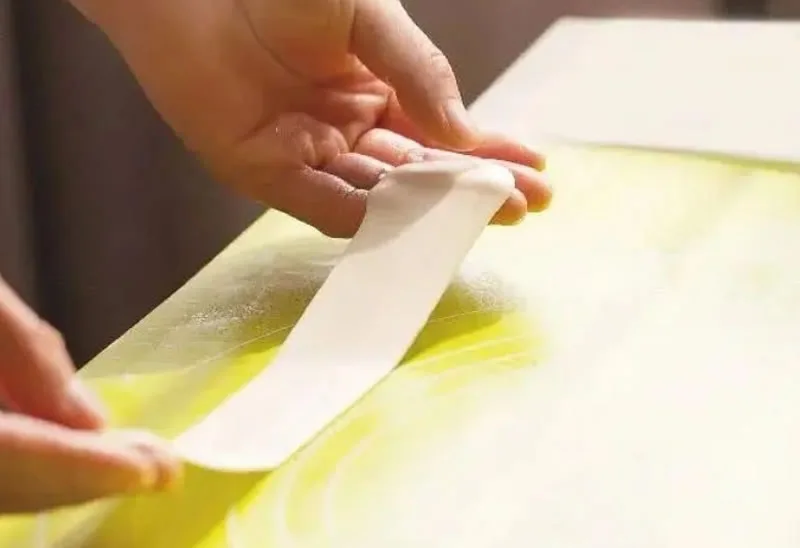
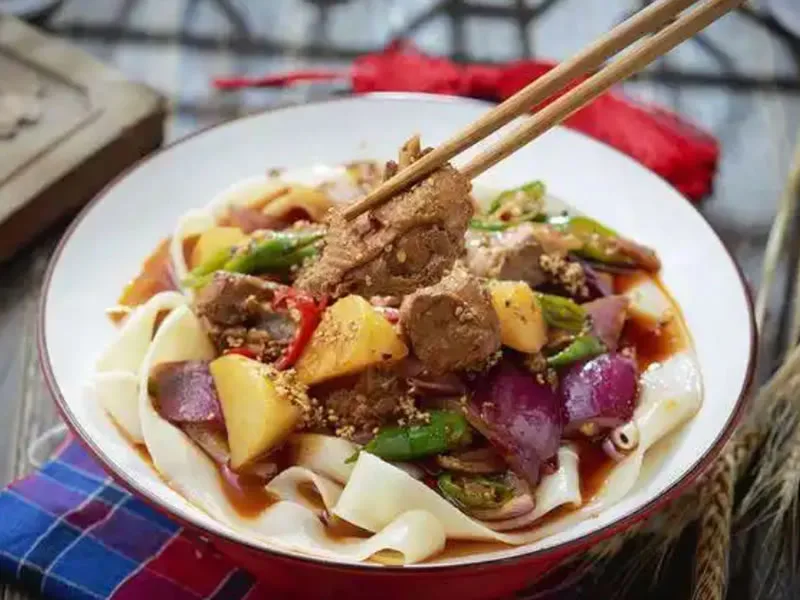
Traditional Biang Biang noodles are all about the art of handmade preparation. The process includes kneading the dough, slamming it onto the table, and stretching it by hand — which is where the fun name comes from! That “biang biang” sound you hear is the dough hitting the counter. This method creates wide, thick, and chewy noodles that are full of character. Every step relies on human skill, making it a true craft.
Modern Production Methods
As Biang Biang noodles grew in popularity, especially outside of Xi’an, the demand led to some modern twists. You can now find pre-made or instant versions, like the dry oil noodle kit made by a local Xi’an company. With these, you don’t need to be a noodle master — you just boil water, cook the noodles, and add the seasoning (like that delicious hot and spicy oil). While these products are super convenient and still taste great, they’re considered semi-finished or instant food — not exactly the same as fresh handmade Biang Biang noodles.
Keeping the Craft Alive
Whether you’re eating handmade or store-bought Biang Biang noodles, one thing stays the same: the core techniques. Even instant versions keep steps like kneading and pulling in their production process. Many are vacuum-packed to stay fresh, but they still aim for that classic, chewy texture that makes Biang Biang noodles so special. So, while not all Biang Biang noodles are handmade these days, the heart of the tradition lives on.