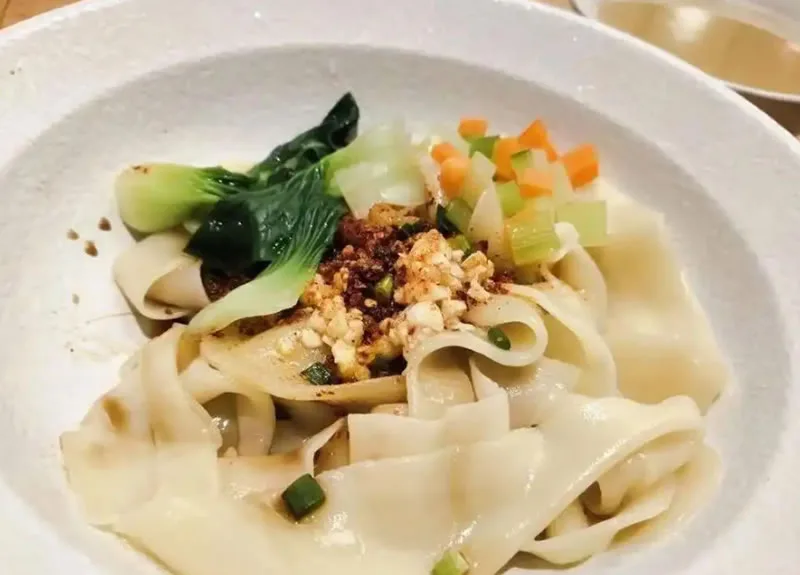
Biangbiang noodles are a highly representative traditional pasta from the Guanzhong region of Shaanxi Province. Their cultural and historical origins are closely linked to local history, folk customs, and language.
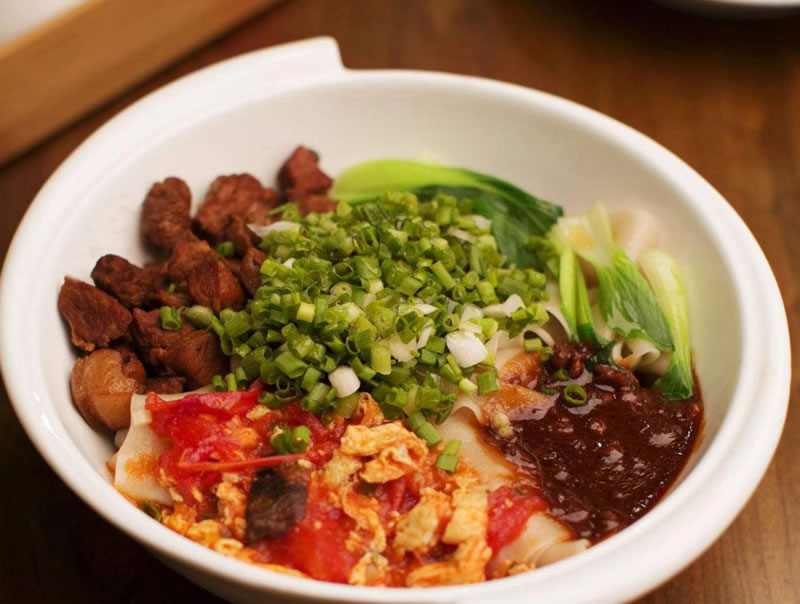
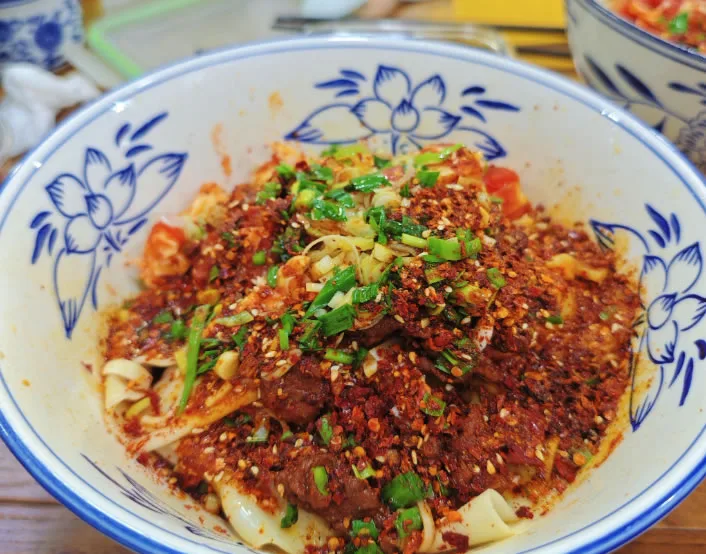
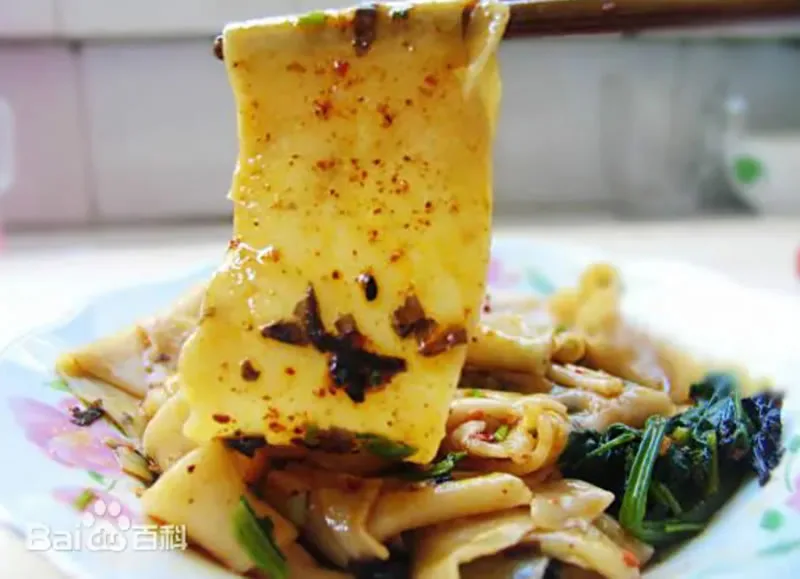
Biangbiang noodles (in Hanyu Pinyin: Biángbiáng miàn; the character “biáng” is a composite character that cannot be typed on a computer and is often replaced with “BiángBiáng miàn,” “biángbiang miàn,” “奤奤面,” or “彪彪面”) are a traditional Han Chinese-style noodle dish from the Guanzhong area of Shaanxi. The name comes from the “biang, biang” sound made during their preparation. The noodles are made from wheat flour milled from Guanzhong-grown wheat, hand-stretched into long, wide, and thick strips. They are served in a broth seasoned with soy sauce, vinegar, monosodium glutamate, Sichuan peppercorns, and other condiments, then topped with sizzling hot vegetable oil.

The Origin Story of Biangbiang Noodles
During the Qin Dynasty, soldiers from the Guanzhong region often fought in long military campaigns far from home. They craved homemade noodles, but carrying a rolling pin and cutting board to make them was impractical. So, a clever army cook came up with a solution: he stretched and slapped the dough against a flat surface—using whatever was available—until it formed long, wide, thick strips resembling a belt. The dough made a “biang, biang” sound as it hit the board.
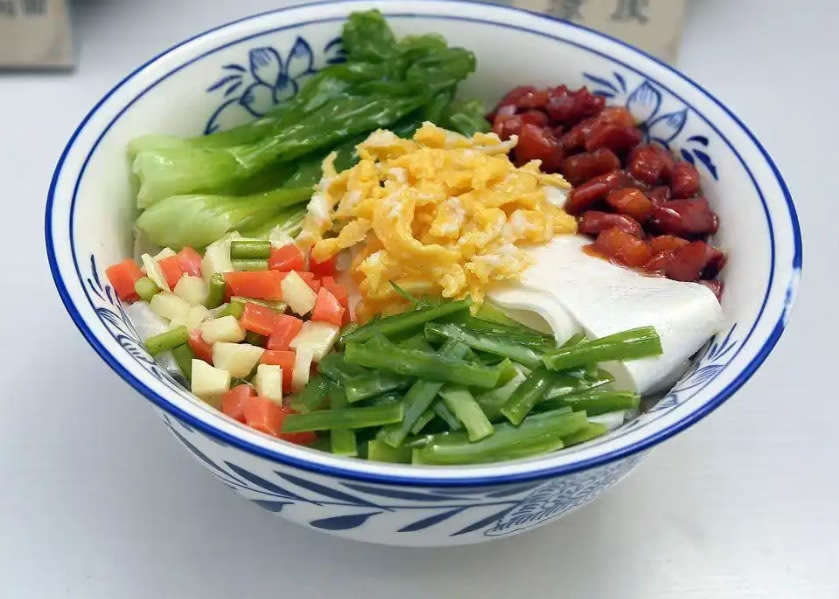
Once cooked, the noodles were served in a large bowl already lined with seasonings, bean sprouts, and vegetables—and of course, topped with a big spoonful of spicy chili oil. The soldiers loved the hearty, warming meal. After the war, the cook returned to his hometown Xianyang and started selling “biangbiang noodles” for a living.
Legend has it that a poor, frustrated scholar—talent unrecognized, hungry and cold—was wandering through Xianyang when he heard the distinct “biang, biang” sound coming from a noodle shop. Curious and starving, he went inside.
He watched as the cook stretched and slapped pieces of dough, boiled them, and served them in big bowls with chili oil, veggies, and spices. Amazed, the scholar ordered a bowl. He ate it all in one go, sweating and satisfied. But when he went to pay, he realized he had no money.
The waiter wasn’t sympathetic. Embarrassed, the scholar tried to buy time by asking: “What’s the name of this noodle?”
“Biangbiang noodles,” replied the waiter.
“And how do you write ‘biang’?”
No one knew—the character didn’t exist.
So the scholar made a deal: he would create the character for “biang” in exchange for the meal.
Inspired by his frustrations—with life, the government, and the imperial exams—he invented a character that captured the spirit of the noodles and the land. As he wrote, he chanted a rhyming description of the character:
“A dot flies to the sky,
The Yellow River bends on either side.
An eight begins the frame, words enter the same,
Twist left and right, long east and west,
A horse king in the middle stands the test.
With a heart below, a moon to the side,
A hook to hang candy with pride.
Then push the cart to Xianyang—let it ride!”
The character was so complex and creative that everyone applauded. From that day on, the name “biangbiang noodles” became famous throughout Guanzhong.
Local Cultural Context
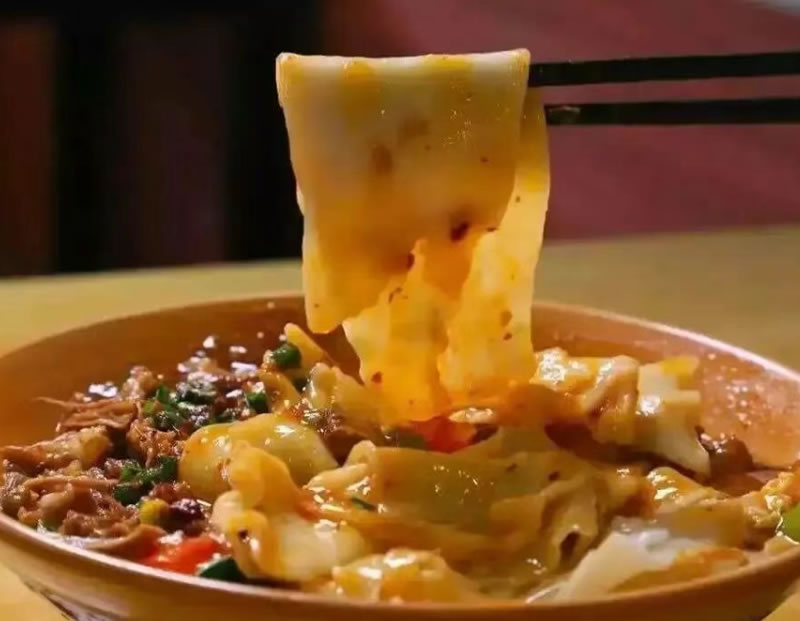
Biangbiang noodles are a classic example of Shaanxi’s regional cuisine—so much so that they’re included in the “Shaanxi Eight Oddities.” One of those oddities is: “noodles like a belt,” referring to their wide, belt-like shape.
A local saying goes: “A straw mat hung as a door curtain, inside we eat biangbiang noodles,” reflecting both the simplicity and richness of Guanzhong life—where food matters more than appearance.
The noodles are always served with four small condiment dishes: salt, chili, vinegar, and soy sauce. Chili—especially chili oil—is essential. Known locally as “Qin pepper,” chilies come in many varieties and are used in countless ways: raw, pickled, fried, as paste, or in oil.
Another saying captures the region’s love for bold flavors:
“Noodles like a belt, chili is the main dish.”
And there’s a classic rhyme old-timers love:
“Rolled thick and cut wide, like a belt—chewy and satisfying.
Chili powder mixed with salt, sizzling oil poured right on top.
Toss the noodles, grab a flatbread, and dig in.”