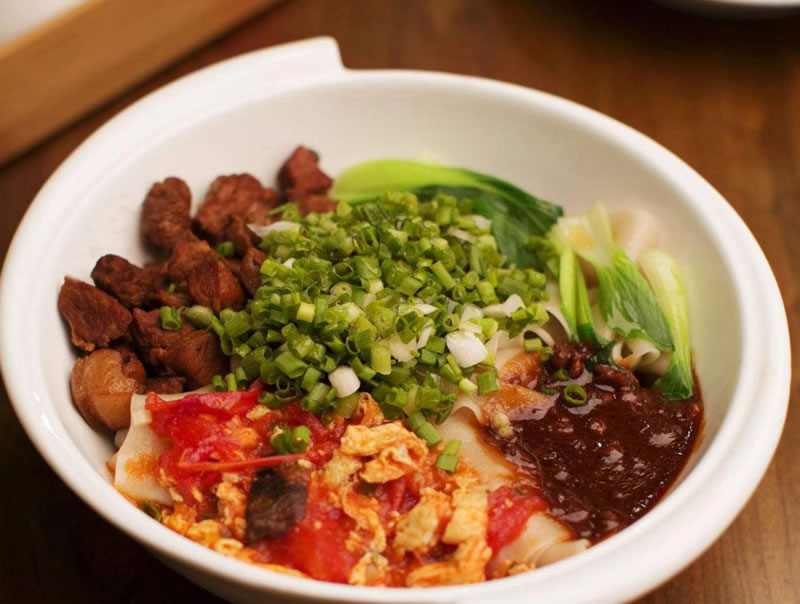
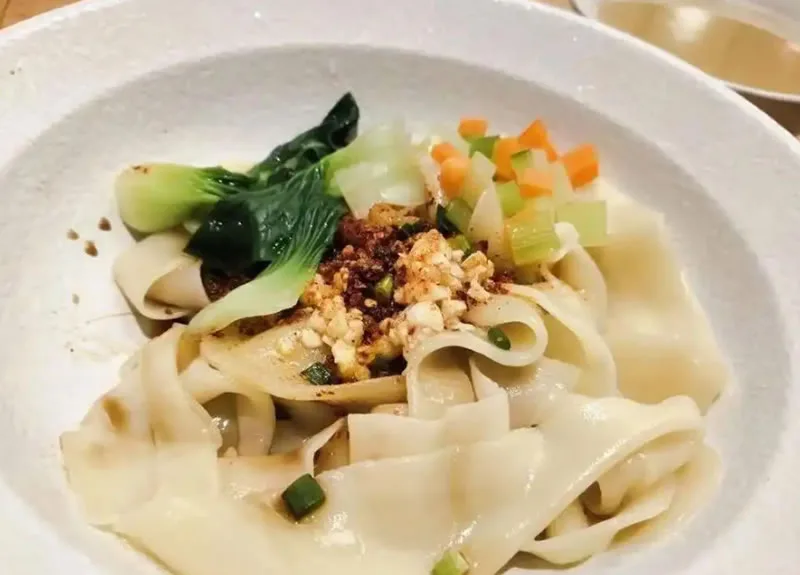
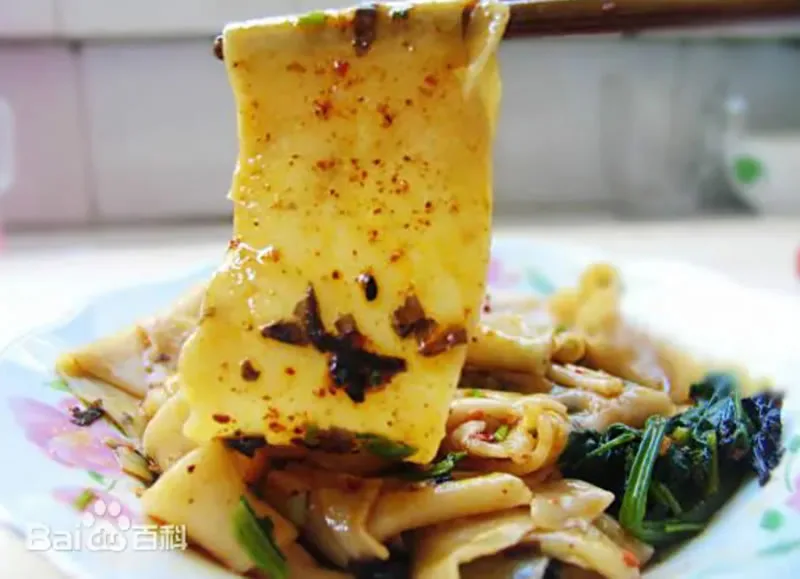
If you’re exploring the diverse world of Chinese noodles, you’ve likely come across a unique name: Biang Biang noodles. What are Biang Biang noodles? They are a traditional specialty from the Guanzhong region of Shaanxi Province, famous for their remarkable width, chewy texture, and flavorful toppings like chili, soy sauce, and vinegar. The name originates from the distinctive “biáng, biáng” sound made when the dough is stretched and slapped against the counter during preparation. Due to their broad, belt-like shape, they are also commonly known as “belt noodles.”
How Biang Biang Noodles Are Made
The production of Biang Biang noodles is a skillful process. It begins with high-quality wheat flour from the Guanzhong area. The dough is kneaded, rested, and then hand-pulled into wide, thick strips. Artisans often use a “double resting” technique to enhance the dough’s elasticity. By repeatedly stretching and skillfully slapping the dough, they create the noodle’s signature width and satisfying chew. Common variations include the very wide “belt noodle” style, a moderately wide “two-wide” style, and even thinner forms like “dragon’s whisker” noodles.
Flavor and Serving Style
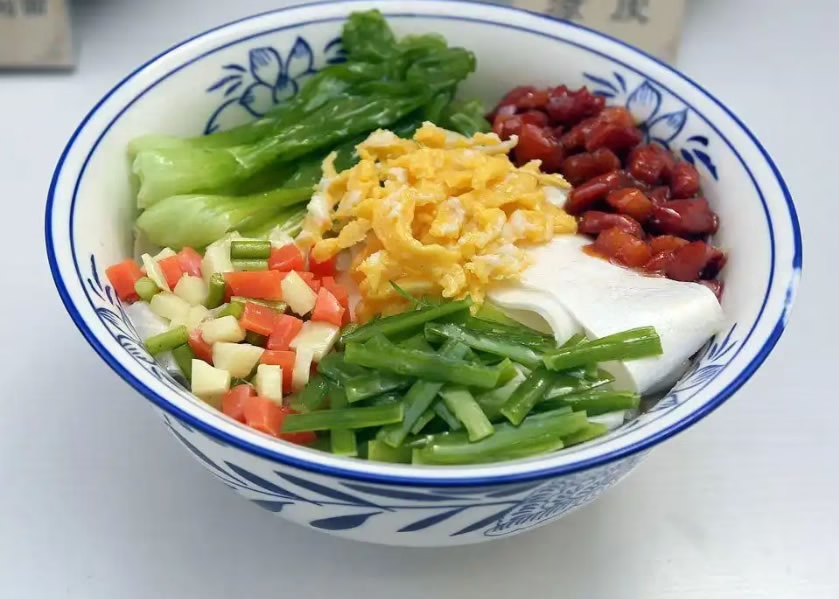
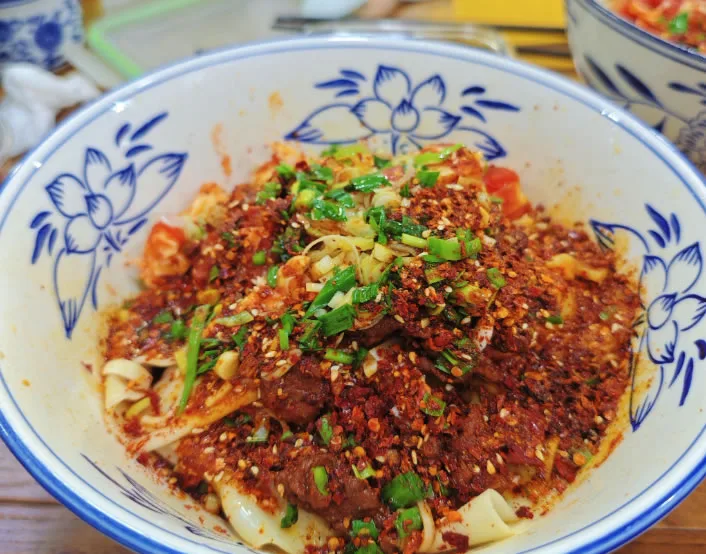
The flavor profile of Biang Biang noodles is bold and aromatic. After boiling, the noodles are typically topped with seasonings such as chili powder, minced garlic, soy sauce, and vinegar. A crucial final step involves pouring sizzling hot oil over the spices, which releases a fragrant aroma and blends the flavors together. The result is a deliciously spicy, tangy, and savory dish. They are often served with beef or fresh vegetables like bok choy, adding heartiness and texture.
Cultural Significance
Biang Biang noodles hold a special place in Shaanxi’s culture, enjoyed in both cities and villages. The character “Biáng” is one of the most complex in the Chinese language, often memorized through a traditional folk rhyme. Due to its unique preparation method and cultural importance, the craft of making Biang Biang noodles has been included in China’s Intangible Cultural Heritage protection programs.
Whether you’re drawn to their unique name, their complex flavor, or their cultural story, Biang Biang noodles offer a truly authentic and memorable taste of Shaanxi cuisine.