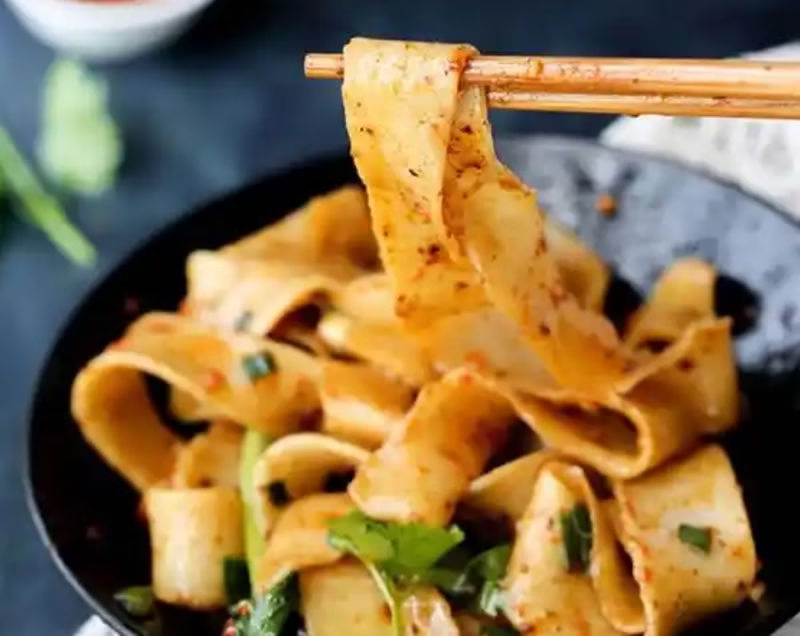
If you’ve found yourself asking, “What are biang biang noodles made from?” you’ve come to the right place. These incredibly wide, belt-like noodles are a superstar of Chinese street food, straight from Shaanxi Province’s Guanzhong region. Their fun name comes from the onomatopoeic “biang, biang” sound the dough makes when chefs expertly slap it on the counter.
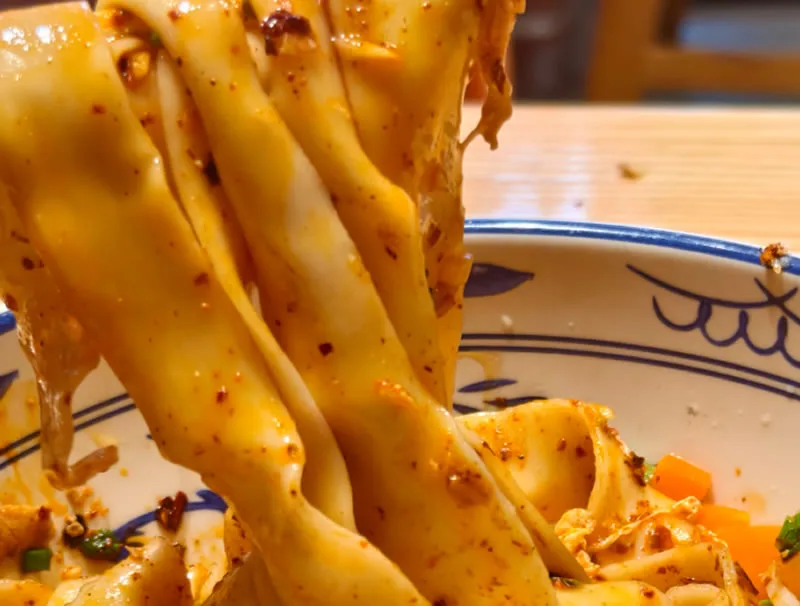
So, let’s dive in and discover exactly what goes into making this delicious and unique dish.
The Noodle Dough: Simple Ingredients, Expert Technique
So, what are biang biang noodles made from at their core? The answer is a surprisingly simple dough where the real magic lies in the technique. The main ingredient is always wheat flour. You’ll typically see recipes using one of two types:
Medium-Gluten Flour (about 450g): This is mixed with a pinch of salt (around 3g) and water (about 210g) to create a smooth, pliable dough.
High-Gluten Flour (about 300g): This option is combined with water (roughly 161g) and salt (2g) to make a chewier, more resilient noodle perfect for pulling and stretching.
The secret to their amazing texture is in the process. The dough is kneaded thoroughly and then left to rest multiple times. This resting period, sometimes called “waking” the dough, is what develops that signature chewy, satisfying bite that makes biang biang noodles so special.
The Flavor-Packed Sauces and Toppings
While the noodles are the star of the show, the supporting cast of flavors is what completes the dish. Unlike a soup noodle, biang biang noodles are usually served dry, tossed in a savory sauce and finished with an aromatic oil drizzle.
The Base Seasonings:
At the bottom of your bowl, you’ll usually find a powerful mix of:
Soy Sauce for a salty, umami base.
Vinegar for a sharp, tangy kick.
Chili Pepper Flakes for heat. (So, to answer a common question: yes, biang biang noodles can be spicy, but you can always adjust the heat level to your taste!)
The Aromatic Oil Drizzle:
This is a can’t-miss step! Scorching-hot vegetable oil is poured over the seasonings and toppings. This “splashing oil” technique instantly sizzles, releasing incredible aromas from:
Minced Garlic
Sliced Green Onions
The result is a rich, fragrant oil that coats every inch of those wide, sturdy noodles perfectly.
The Side Dishes (Optional but Recommended)
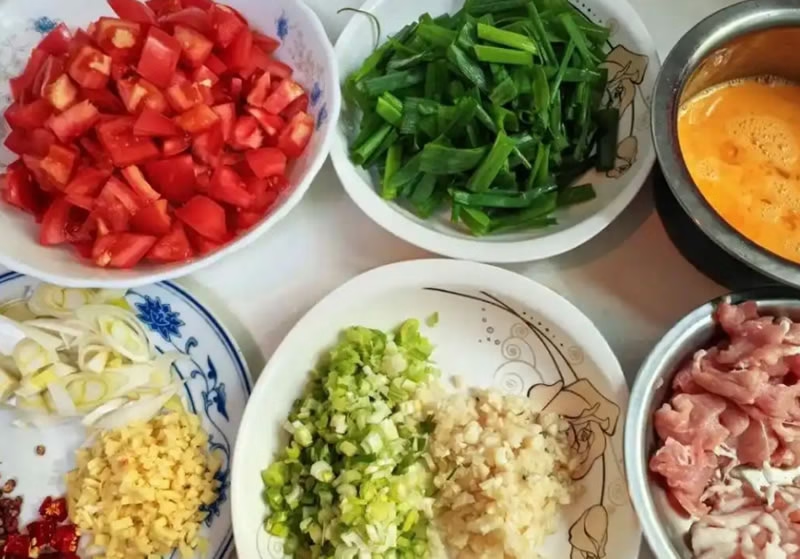
To add extra texture, color, and nutrition, cooks often include vegetables with the ingredients for biang biang noodles. You’ll commonly find:
Bok Choy: Lightly blanched or stir-fried.
Sliced Carrots & Wood Ear Fungus: These add a delightful crunch and are usually lightly cooked before being added.
That said, the dish is versatile. Sometimes you’ll get a simple version with just the noodles and sauces, while other times it might come topped with a hearty spoonful of braised pork.
Now you know exactly what biang biang noodles are made from—a humble wheat dough transformed by skill, brought to life by a savory and aromatic sauce that makes every single bite an adventure.