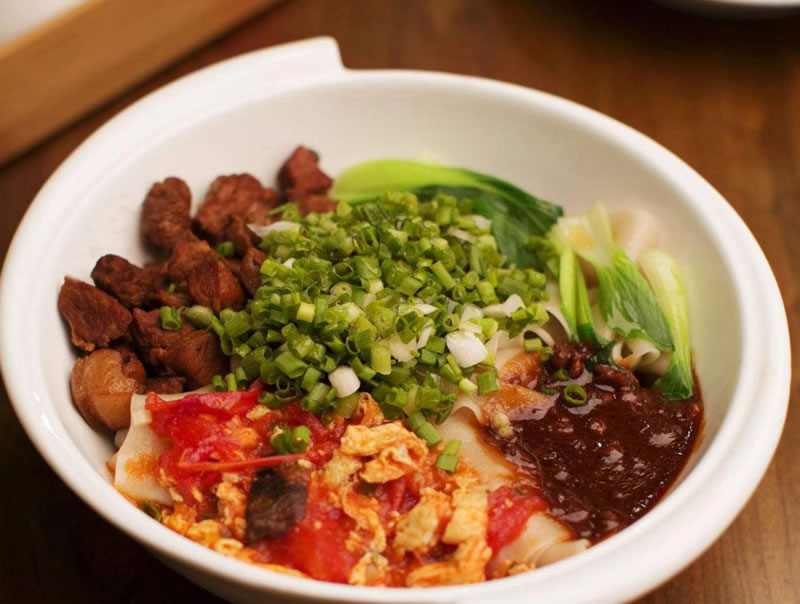
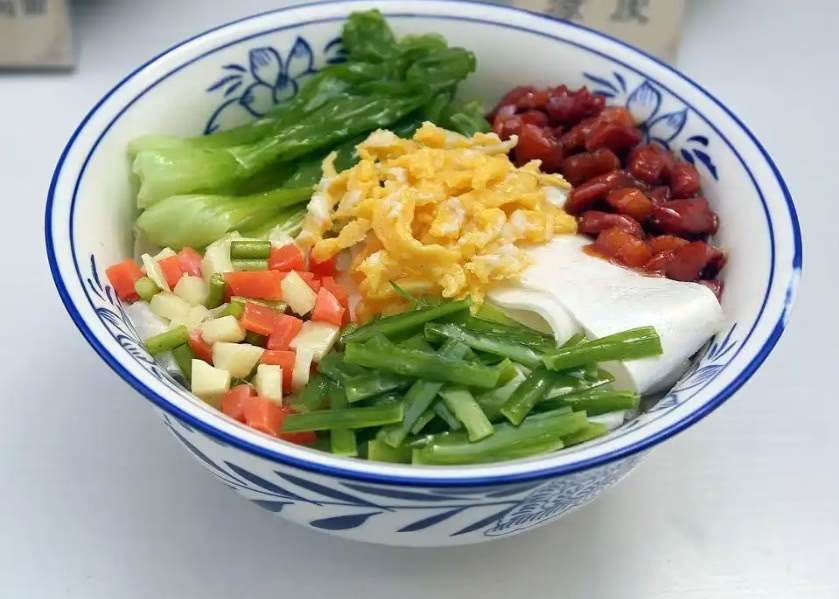
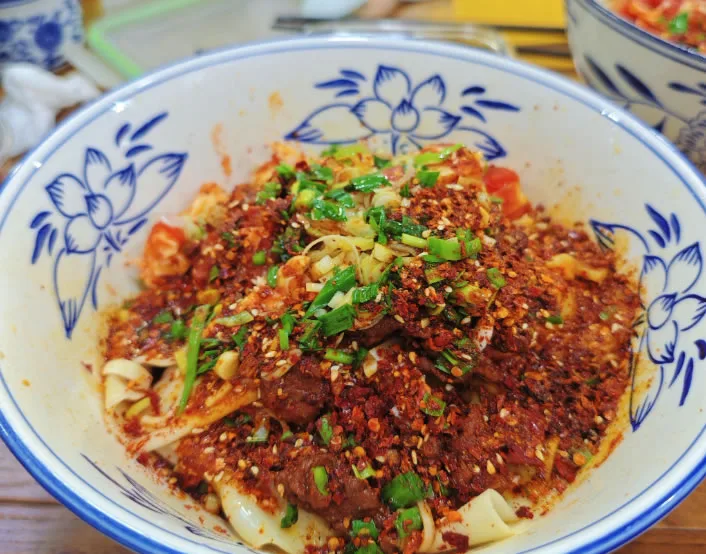
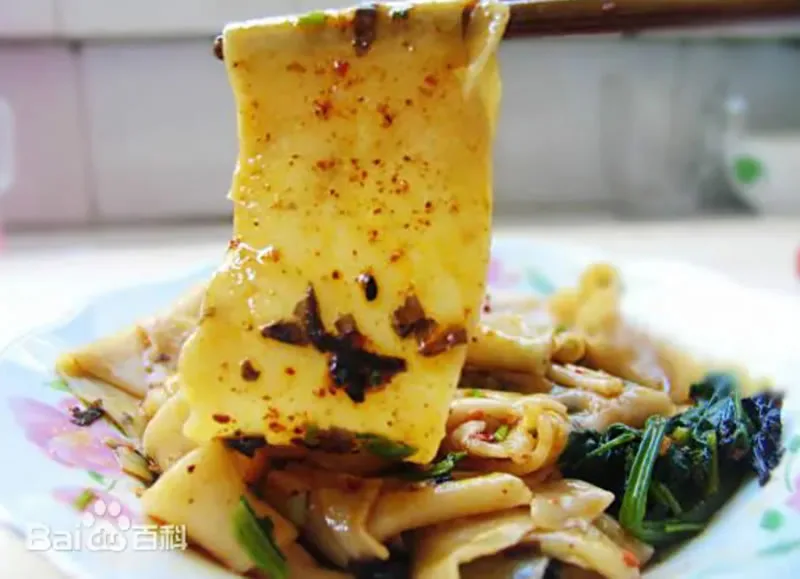
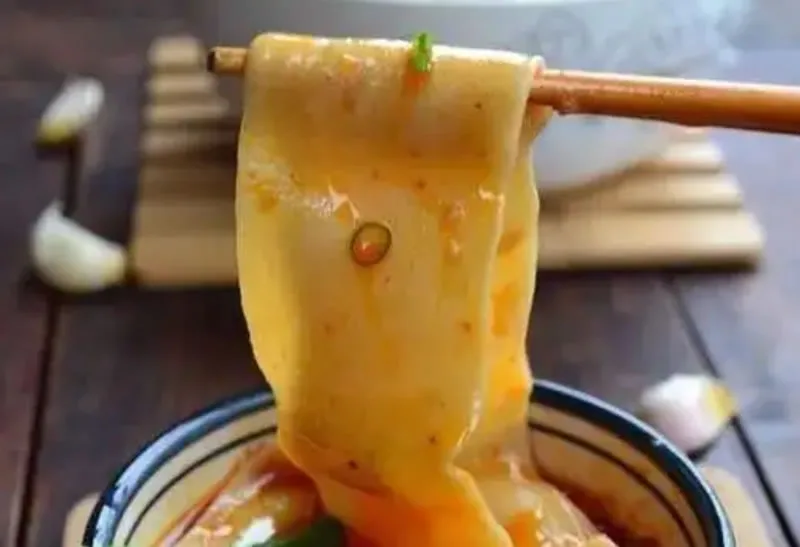
If you’ve ever seen Biangbiang noodles, you might have wondered: Why are these noodles so incredibly wide? Sometimes called “belt noodles” because they resemble a pants belt in width, Biangbiang noodles stand out for their unique shape and chewy texture. But there’s more to their width than meets the eye—it’s deeply connected to how they’re made and the region they come from.
The Hand-Pulled Process Behind the Wide Noodles
Biangbiang noodles are traditionally made by hand. The dough is kneaded and left to rest—sometimes for several hours—to develop its chewy texture. Then, it’s rolled out to about the thickness of a coin. Using a combination of pulling and slapping, the dough is stretched into wide ribbons, often over a meter long and 4–5 centimeters across. This hand-rolling and pulling process is what gives Biangbiang noodles their signature width and firm bite.
Why the Wide Noodle Design Makes Sense
So, just how wide are Biangbiang noodles? Usually between 4–6 centimeters, with a thickness similar to a coin, and yes—they can be over a meter long! This broad, sturdy shape isn’t just for show. It helps the noodles hold onto hearty toppings like rich meat sauces or spicy dressings. It also fits perfectly with the bold and straightforward eating style popular in the Guanzhong region, where people love a filling and “brisk” meal.
How Regional Culture Shaped the Noodle
Biangbiang noodles are a classic dish from the Guanzhong area in Shaanxi. The wide, belt-like shape reflects the local personality—bold, generous, and no-nonsense. In fact, people in Guanzhong often call these wide noodles “Biangbiang mian,” a name that captures both the sound of the dough being slapped on the counter and a sense of local pride. So, the width isn’t just practical—it’s a symbol of the region itself.
The Historical Roots of the Wide Belt Noodle
Biangbiang noodles didn’t get their width by accident. There are some interesting stories and practical reasons behind their belt-like shape.
One Theory: Military Rations from the Qin Era
One popular story goes back to the Qin Dynasty. It’s said that when Qin soldiers went off to battle, they needed food that was easy to carry and wouldn’t spoil quickly. Cooks came up with a type of wide, flat noodle shaped like a belt—easy to pack, easy to eat, and very filling. And the name “Biangbiang”? It may have come from the “biang, biang” sound the dough made when slapped and stretched.
How Labor and Local Food Culture Played a Role
People in the Guanzhong region have long relied on farming, and they needed filling meals to keep them going through long days of labor. Making wide noodles was a smart solution—they were simple to prepare, easy to carry into the fields, and super satisfying. This style of noodle also reflects the local food culture, which values hearty and “real” food that sticks to your ribs.
Where Legend Meets Real Life
Over time, stories and daily life blended together. There’s even a fun legend about a scholar and a noodle shop owner creating the unique Chinese character “biang.” Whether or not that story is true, the wide shape of Biangbiang noodles remains a tribute to traditional methods—slapping and stretching the dough by hand—while also becoming a cultural icon. So, every time you eat these wide belt noodles, you’re tasting a piece of Shaanxi’s history.